e-OSCAR and ACDV: how your credit dispute really travels
The automated pipe your dispute runs through, why a "verified" result can come back in seconds, and how Hinkle v. Midland says that is not enough.
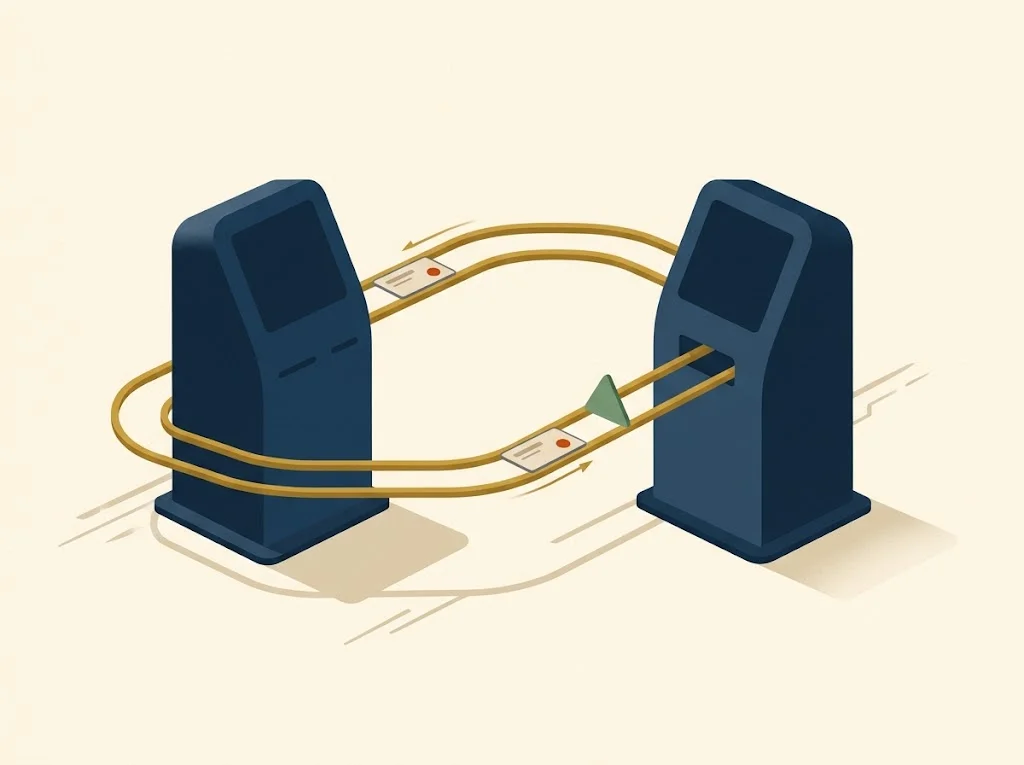
The short answer. When you dispute an item on your credit report, the credit bureau does not phone the company that reported it — it routes your dispute electronically through an automated system called e-OSCAR, which sends the data furnisher a coded form known as an ACDV (Automated Credit Dispute Verification). The furnisher reviews and responds through the same pipe, which is why a result can come back marked “verified” in a matter of seconds. The catch, as the courts have made clear, is that a fast electronic “verified” is not the same thing as a genuine investigation.
What e-OSCAR actually is
e-OSCAR is the web-based, Metro 2-compliant automated system that the consumer reporting agencies (the credit bureaus) and data furnishers use to create and respond to consumer credit disputes. Most people picture a dispute as a human at the bureau picking up the phone and asking the lender, “Did this really happen?” That is not how it works. When you dispute an item with a bureau, the bureau transmits your dispute electronically through e-OSCAR. Everything that follows — the question, the supporting detail, the answer — moves as structured data and codes rather than as a conversation, which is the single most important thing to understand about why disputes resolve the way they do.
The ACDV: the form your dispute becomes
Once your dispute enters the system, the bureau forwards it to the data furnisher as an ACDV. The furnisher reviews the item and responds electronically through e-OSCAR — confirming the information, correcting it, or deleting it — and e-OSCAR relays that result back to the bureau, which is what eventually updates your file. The whole round trip is built for speed, and that speed is exactly why a “verified” answer can land almost immediately. There is no waiting for someone to dig through paper records as a matter of course; there is a coded request and a coded reply.
It helps to keep one close cousin of the ACDV distinct from it. An ACDV is the dispute form sent from the bureau to the furnisher, so it is driven by you, the consumer. An AUD — an Automated Universal Dataform — runs the other direction entirely: it is a furnisher-initiated update sent to the bureaus to change account data outside of any dispute. Said plainly, an ACDV is a dispute and an AUD is a furnisher update. Confusing the two is a common way to misread what is happening to your file, so it is worth fixing the distinction in mind: ACDV equals dispute, AUD equals furnisher update. The distinction also explains the most common way a deleted item comes back: the furnisher’s next routine update carries the old data again, which is exactly the reappearance the bureau must have procedures to prevent under 1681i(a)(5)(C), the reinsertion rule.
If you want the mechanics of how a dispute first enters this pipe in the first place, that is covered in our walkthrough on how to file the dispute that enters this system.
Why “verified” is often hollow
Here is where the design of the system becomes a problem for consumers. Because the process is automated and condensed into codes, a furnisher can “verify” a disputed item by doing little more than re-checking it against its own electronic records and sending back a confirmation — without examining any underlying documentation. The furnisher is, in effect, asking itself whether its own file says what its own file says, and unsurprisingly the answer comes back yes. That is not a neutral re-examination of whether the debt is really yours; it is an echo. The speed that makes e-OSCAR efficient is the same speed that lets a thin investigation pass as a real one.
The investigation duty this all turns on belongs to the furnisher, and it is laid out in our explainer on the furnisher investigation duty this enforces. The clock the bureau is racing against — the window in which it must complete its reinvestigation — is the subject of our guide to the bureau clock the ACDV runs on.
What the courts say: Hinkle v. Midland
The case that put a name to this problem is Hinkle v. Midland Credit Management, decided by the Eleventh Circuit in 2016. When the bureaus told Midland that the consumer disputed two accounts, Midland’s investigation consisted, at most, of two steps: it double-checked the information it had reported against its own electronic data files, and it sent the consumer a letter asking for any documentation she had. On that record, the court held that a reasonable jury could find Midland willfully violated the furnisher’s duty under 15 U.S.C. 1681s-2(b) by reporting the accounts as “verified” without obtaining sufficient documentation that the debts actually belonged to her.
The lesson is blunt and it travels well beyond Midland. Parroting your own file back through e-OSCAR is not necessarily a reasonable investigation. A furnisher that confirms an item simply because its own records still show it — without ever obtaining proof that the underlying obligation is genuinely the consumer’s — may be doing far less than the Fair Credit Reporting Act requires, no matter how quickly the “verified” code comes back.
The regulatory backdrop
The courts are not alone on this. The Consumer Financial Protection Bureau’s Consumer Financial Protection Circular 2022-07 states that a furnisher — or a bureau — that simply “parrots” information without a reasonable investigation does not satisfy the Fair Credit Reporting Act. The furnisher’s direct-dispute duties also live in the regulation, at 12 CFR 1022.43. Read together, these reinforce the same point the Eleventh Circuit made: an e-OSCAR confirmation is a starting point, not proof that a real investigation took place. A “verified” stamp tells you the loop completed, not that anyone genuinely looked.
What this means for you
The practical takeaway follows directly from how the system is built. Because e-OSCAR is automated and code-driven, a thin or document-light dispute can get “verified” fast, simply because there is nothing in it for the furnisher to wrestle with. The counter is to give the furnisher something specific to investigate — actual documentation, or a precise factual error rather than a vague objection — so that a mere re-check of its own file cannot honestly close the matter. It also matters which path you take into the system, because the routing you choose affects your ability to sue later; that choice is the subject of our guide on the routing choice. And when an item keeps coming back “verified” against the weight of your evidence, that is the signal to escalate rather than to keep refiling the same thin dispute and expecting a different code. The pipe is fast by design. Your job is to make sure there is something inside it worth investigating.
Quick answers
What is the difference between an ACDV and an AUD?
An ACDV (Automated Credit Dispute Verification) is the dispute form a credit bureau sends to a data furnisher when you challenge an item, so it is consumer-dispute-driven. An AUD (Automated Universal Dataform) runs in the opposite direction — it is a furnisher-initiated update sent to the bureaus to change account data outside of a dispute. In short, an ACDV is a dispute and an AUD is a furnisher update.
Why can a credit dispute come back "verified" so quickly?
Because the dispute travels electronically through e-OSCAR rather than by phone, and the system condenses everything into codes. A data furnisher can "verify" by doing little more than re-checking the disputed item against its own electronic records and sending back a confirmation, without examining underlying documentation. That speed is exactly what the law and the courts push against.
What did Hinkle v. Midland Credit Management decide?
In Hinkle v. Midland Credit Management (11th Cir. 2016), Midland's investigation consisted, at most, of double-checking the information it had reported against its own electronic data files and sending the consumer a letter asking for any documentation she had. The court held that a reasonable jury could find Midland willfully violated its furnisher duty under 15 U.S.C. 1681s-2(b) by reporting the accounts as "verified" without obtaining sufficient documentation that the debts actually belonged to her.
Does a "verified" result mean the furnisher really investigated?
Not necessarily. The CFPB's Consumer Financial Protection Circular 2022-07 states that a furnisher or bureau that simply "parrots" information without a reasonable investigation does not satisfy the Fair Credit Reporting Act. An e-OSCAR confirmation is a starting point, not proof that a real investigation happened.
Educational content only. finbarrow is an independent editorial publication, not a licensed financial advisor, broker, tax preparer, or attorney. Verify rates and terms with the issuer or relevant regulator. See disclaimers and funding disclosures.